
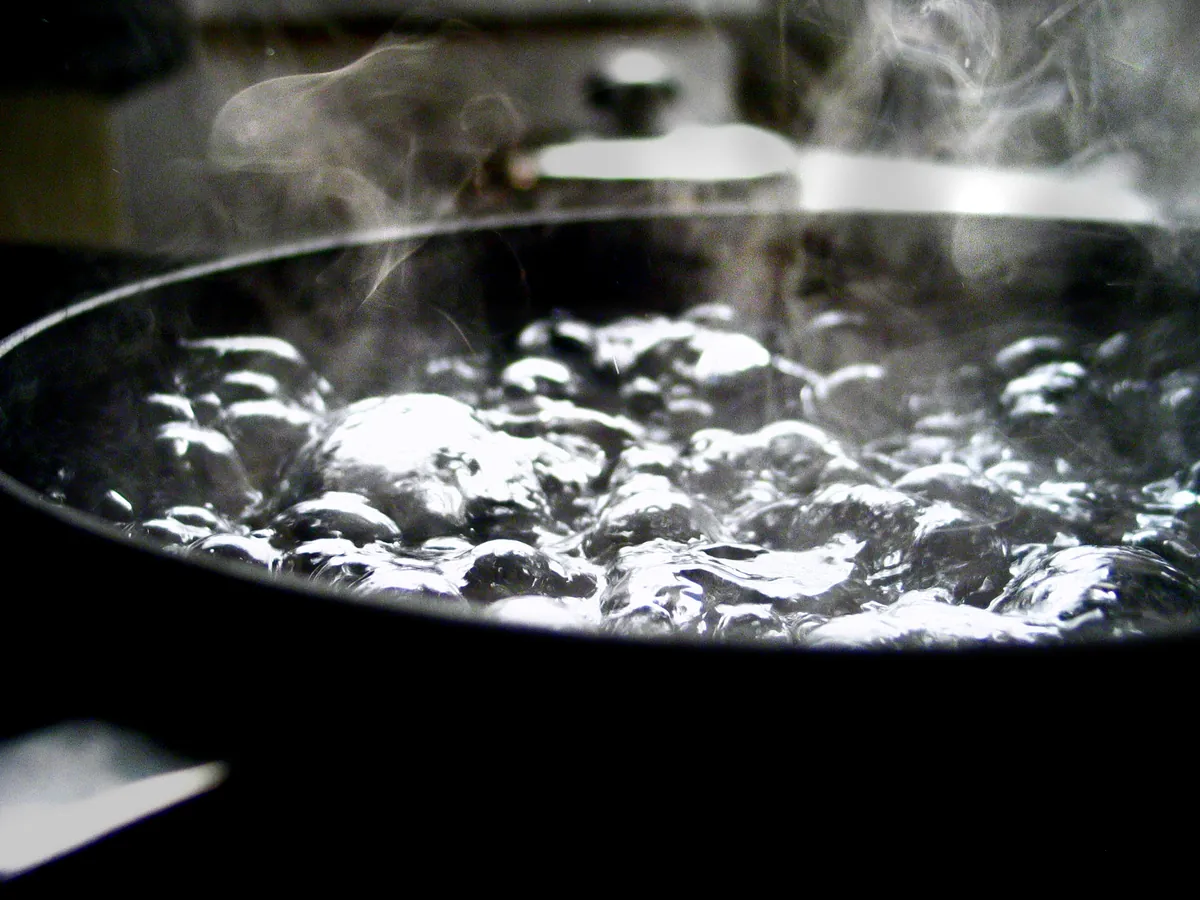
Running a restaurant or bistro brings a lot of joy, but there is a less pleasant challenge that every kitchen faces: odours, smoke and greasy deposits. Most places do have an extraction system, but often even that is not enough: the odour can still escape into the surroundings or flow back into the building. This is not only unpleasant but can also lead to complaints and health problems.
Why does kitchen air purification matter?
Disputes with neighbours can be avoided
The kitchen of a busy restaurant or bistro produces steam, smoke and all kinds of smells for hours on end. Although the smell of food is enticing to guests, local residents perceive it quite differently: for them it is often disturbing, even a burden. Especially in urban environments, where buildings are close together, odours can quickly get into neighbouring flats or offices. Sooner or later this almost certainly leads to conflict. With a modern, efficient air purifier, however, all this can be prevented: cleaner air means calmer relations with neighbours and a peaceful business.
Health protection
It is not only odours that spread through kitchen air. Smoke and greasy vapours contain tiny particles invisible to the naked eye which, reaching deep into the airways, can cause irritation, coughing or even respiratory problems in the longer term. Bacteria and other microorganisms, also carried in the air, can add to this. This affects not only the everyday comfort of kitchen staff but also the health of guests if polluted air enters the dining area. Clean air is therefore not a luxury but a basic occupational and health protection issue: it contributes to staff well-being, reduces the risk of illness and creates a safer environment.
A clean interior
A common problem is that kitchen gases flow back into the building through the ventilation system or fresh air openings. This is particularly typical in densely built-up city centre districts, where several restaurants and office buildings operate side by side. The result? Instead of the aroma of delicious food, guests in the dining area are greeted by the smell of smoke or burnt oil. And staff have to spend their working day in polluted air, day after day. This spoils the guest experience, demotivates staff and in the long run can damage the venue's reputation. A modern air purification system, however, prevents kitchen by-products from getting back indoors: guests smell what they should – the mouth-watering aroma of the food and nothing else.
The FKE-UV-K series: two technologies, one solution
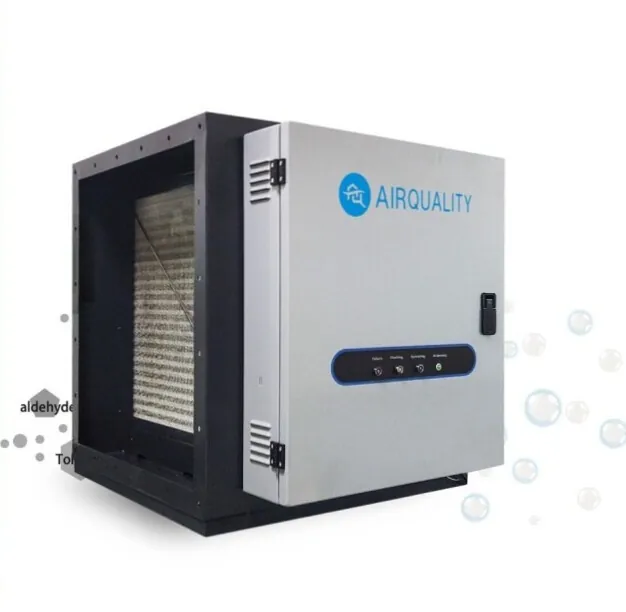
Kitchen air purification is not a simple task. Besides steam, smoke and greasy deposits, there are unpleasant odours and invisible harmful gases, all of which require different treatment. A conventional extractor or filter can rarely solve everything – but the FKE-UV-K series is special precisely in this respect: it combines two complementary technologies, so it treats kitchen air pollution comprehensively.
Electrostatic precipitation (ESP)
The first line of defence is electrostatic precipitation. Airborne grease particles and smoke are attracted to an electrically charged surface and "trapped". It is as if an invisible magnet were at work in the kitchen: the air is cleaned and the deposits do not escape into the surroundings. A great advantage of ESP is that it captures even the tiniest particles, which would simply slip through conventional filters.
UV photolysis
The second step relies on the power of UV light. Along with the smoke, many unpleasant odours and harmful gases leave the kitchen that cannot be removed by electrostatic precipitation. UV photolysis breaks these compounds down: high-energy UV radiation "takes apart" the molecules, neutralises odours and breaks down harmful gases. The result: cleaner, fresh air that causes no complaints from staff or neighbours.
The two processes together
The real strength of the FKE-UV-K lies in the cooperation of the two technologies. The ESP cleans the air of visible pollutants – grease and smoke – and UV photolysis does the "fine-tuning": it eliminates the odours and gases that other systems would leave behind. This results in a cleaning efficiency of more than 90%, which in practice means that kitchen air pollution is almost completely eliminated.
In other words, not only is the air cleaner, but the surroundings are calmer, staff are healthier and guests are more satisfied.
All in all, clean kitchen air is not just an "extra convenience" but one of the cornerstones of healthy, sustainable and successful hospitality. And the FKE-UV-K series delivers exactly that: calmer surroundings, healthier operation and a sustainable long-term business advantage.